

How Thick a Patio Slab Should Be for Strength and Long-Term Use
The proper slab thickness for patio projects is usually 4 inches for most homes. This works well for foot traffic, patio furniture, and small grills. If the patio will hold heavy items like hot tubs or outdoor kitchens, 5 to 6 inches may be needed. Soil type and base prep also play a big role in how strong your patio will be.
What You Need Before Starting
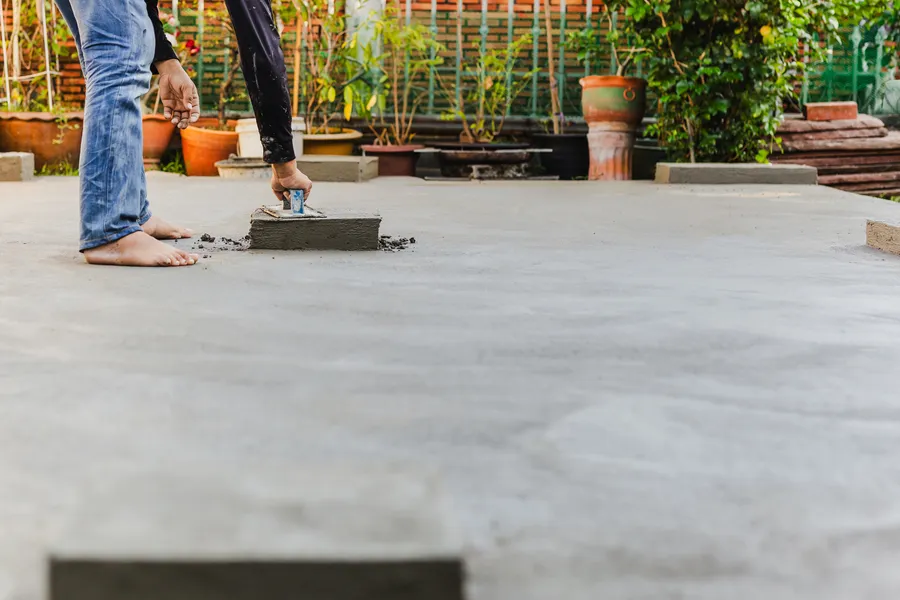
Before pouring concrete, you need a solid plan. Thickness is only one part of a strong patio. The ground under the slab matters just as much.
- Stable, compacted soil
- 4 to 6 inches of crushed gravel base
- Wood forms set to the right height
- Rebar or wire mesh for reinforcement
- Correct concrete mix for outdoor use
If the base is soft or uneven, even a thick slab can crack. Good prep work helps support proper slab thickness for patio projects and keeps the surface level.
Step-by-Step Process for Getting the Thickness Right
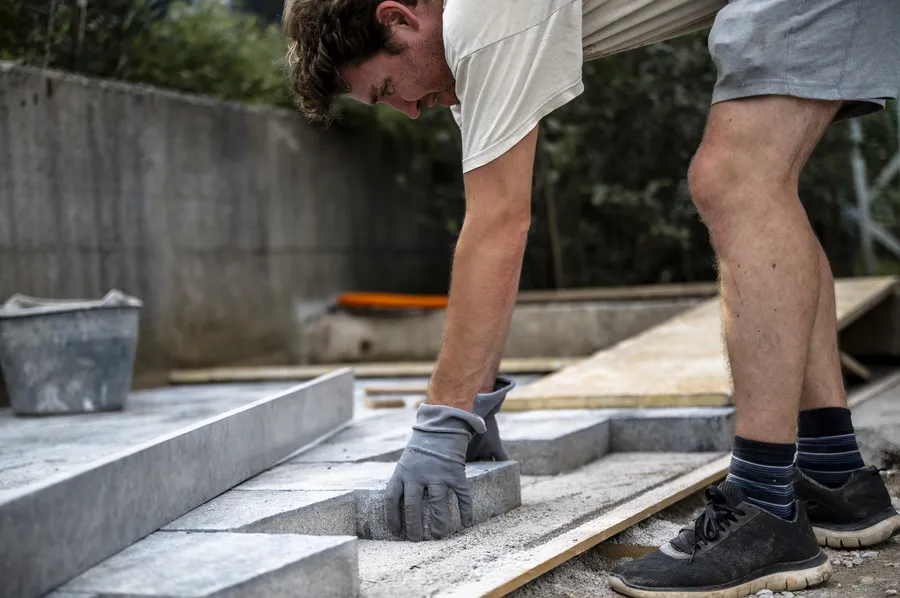
Here is a simple breakdown of how most concrete patio installation jobs are done correctly.
- Excavate the area to the correct depth, allowing room for gravel and 4 inches of concrete.
- Compact the soil to reduce future settling.
- Add and compact a gravel base evenly across the area.
- Set forms to mark the finished slab height.
- Place reinforcement like rebar or mesh in the middle of the slab depth.
- Pour concrete evenly to reach the planned thickness.
- Screed and level the surface before finishing.
During concrete patio installation, measuring depth in several spots helps avoid thin areas. A slab that is 3 inches thick in one corner and 4 inches in another can lead to cracks.
Common Mistakes to Avoid
Many patio problems start with poor thickness planning. Here are mistakes we often see.
- Pouring less than 4 inches to save money
- Skipping reinforcement on larger patios
- Not compacting the base soil
- Pouring directly on dirt without gravel
- Making the patio thicker on one side only
It may seem like extra concrete adds strength anywhere, but uneven depth can cause stress points. Also, patios attached to a house need proper spacing and joints to reduce cracking.
When Thicker Slabs Are Needed
Not every home needs the same slab thickness. Some situations call for more support.
If you plan to add a hot tub, outdoor fireplace, or heavy stone kitchen, 5 to 6 inches is often safer. Drive-over patios also need extra strength. In these cases, concrete patio installation should include stronger reinforcement and a thicker edge beam.
Soil type matters too. Clay soil expands and shrinks with moisture. Sandy soil drains fast but can shift. Both can affect proper slab thickness for patio projects. A thicker slab with strong base prep helps reduce movement.
Why Service Category Planning Matters
Your patio does not stand alone. It is part of your full outdoor service category. Drainage, grading, and nearby structures all affect performance. If water drains toward the slab, even the correct thickness will not prevent issues.
Professional planning looks at the whole yard, not just the concrete area. Slope, joints, and expansion gaps must all work together. That is why experienced crews take extra time during layout.
Final Recommendation and Next Steps
Choosing the right thickness is about balance. Four inches works for most homes. Five or six inches is better for heavy loads. Always pair the slab thickness with proper gravel base and reinforcement. Cutting corners on depth can lead to cracks, sinking, and costly repairs later.
Get Expert Help With Your Patio Project
If you are planning a patio in Painesville, OH, our team at Rea Concrete & Construction can help you choose the right slab depth for your space and soil. We handle every step of concrete patio installation with careful prep and strong materials so your patio lasts for years. Call us at (440) 273-6271 to schedule an estimate and talk through your project details with our crew.